


Wikoo - Voice Chat Party&Games
4.05.00 Reviews
App Specs
- Version
- 1.8.10
- Updated On
- License
- Free
- Downloads
- 50,000+
- Developer
- Asif Infotech
- Categories
- Communication
- Platform
- Android
Screenshots
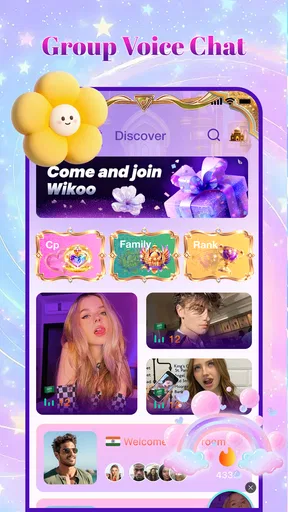



 Analysis by AppCompare
I tried Wikoo - Voice Chat Party&Games as a communication app built around live social interaction rather than ordinary one-to-one messaging. Its appeal is easy to understand: you enter voice party rooms, spend time with people from different parts of the world, and use games as a reason to keep the conversation moving. That combination makes it feel more like a casual social hangout than a conventional chat inbox.
My first impression was that Wikoo works best when I treat it as a drop-in activity. I am not opening it to write a carefully composed message or manage a long contact list. I am opening it when I want company, a quick conversation, or a shared game without arranging a formal call first. That distinction matters, because the app’s value depends heavily on the quality of the live room I join and the reliability of my connection at that moment.
Wikoo is free to install, although it includes optional in-app purchases ranging from around fifty cents to just over five dollars per item. It is listed for mature users aged 17 and over, and the developer is Asif Infotech. The app has reached over fifty thousand installs and holds a four-point-zero average from around seven hundred ratings, which suggests that it has found a modest but real audience while still being smaller than the biggest social voice platforms.
How Wikoo feels when the connection is doing the work
I focus here on how connection quality shapes the whole visit, from deciding whether to stay in a room to recovering when conversation becomes hard to follow. A practical habit is to judge the audio before sharing personal details or settling into a longer exchange; that gives me a chance to leave early if the room feels uncomfortable or the sound is unreliable.
Voice rooms are the center of the experience
The strongest part of Wikoo is the way voice changes the effort required to socialize. Text chat asks me to think of something to type, wait for a response, and interpret short messages without much emotional context. A voice room can feel more immediate. Even a simple greeting, reaction, or short exchange can make the room feel active in a way that a quiet message thread cannot.
That immediacy also creates the app’s main weakness. A voice room is only enjoyable when the network connection is stable enough for people to understand one another. A delayed response can make someone appear uninterested, while broken audio can turn a potentially friendly conversation into repeated requests to speak again. In Wikoo, connectivity is not a background technical detail; it directly shapes whether the social experience feels relaxed or frustrating.
I found it useful to join with a clear expectation. If I wanted a calm conversation, I looked for a room that seemed focused on talking rather than treating every room as a guaranteed game session. If I wanted quick entertainment, I treated the room as a lightweight social stop instead of expecting a deep discussion. This small change in mindset helped me judge the app more fairly.
Worth Reading Before You Choose

Switching to Android Auto Means Rethinking Your Driving Routine

Google Calendar Makes a Crowded Week Easier to Manage

Baby Panda World Brings Quick Play to Modern Phones, but Its Game Library Feels Busy

ESPN’s Live Game View Makes Following Close Games Easier

QuizzLand Review: A Good Fit for Short Trivia Breaks, Not Every Player

Basketball Stars: Multiplayer Is Fast, but Can It Recover When Matches Go Wrong?
Games give conversations a practical starting point
The games are important because they reduce the awkwardness of entering a room where I do not know anybody. Instead of trying to invent a topic immediately, I can use the activity as a shared point of attention. That is especially helpful for people who enjoy meeting strangers but dislike the pressure of introducing themselves in an empty conversation.
There is a useful trade-off here. A game can keep a room lively, but it can also make the interaction feel less personal. If the activity becomes the only focus, the voice element may turn into background noise. I would use Wikoo’s games as conversation starters rather than assuming they replace a dedicated gaming platform. The app is more convincing as a social place with games attached than as a full competitive game service.
A practical approach is to speak briefly before committing to a long session. I can listen to the room, check whether the pace suits me, and leave without having invested much time. That habit is more valuable than it sounds: live social apps can feel unpredictable, and Wikoo is easier to enjoy when I treat room selection as part of the experience rather than expecting every room to fit.
Why mobile context changes the experience
Wikoo makes the most sense in the spare moments when I have a phone nearby and want lightweight company. It can fit a short break, a quiet evening at home, or a period when I want to hear people talking without arranging a call in advance. The mobile format lowers the barrier to joining, but it also encourages shorter, less committed sessions.
I would be careful about using it while walking, commuting, or doing anything that requires attention. Voice rooms invite passive listening, yet the social pressure to respond can still pull focus away from the real-world task. The mature age label is another reason to use judgment about where and when to participate, particularly around younger family members or in shared public spaces.
Headphones can make a meaningful difference in a voice-based room. They help me hear quieter speakers and reduce the chance that other people’s voices are picked up again through the phone speaker. I would also avoid joining from a noisy café or a windy outdoor location unless I am prepared for other participants to struggle with my audio. These are simple habits, but they improve the room for everyone rather than just making my own session more comfortable.
What happens when the network fails
The most important limitation is that Wikoo’s core appeal relies on a live connection. When audio becomes choppy or responses arrive late, the social rhythm disappears. A joke lands too late, a game instruction becomes unclear, and people may talk over one another because nobody can tell whether the previous speaker has finished. In a text-first app, a weak connection may delay a message; in a voice room, it can damage the whole interaction.
My advice is to recover quickly instead of repeatedly forcing a bad session. If a room becomes difficult to follow, I would leave and try another one after checking the connection. Moving closer to a stronger signal, pausing other network-heavy activity, or switching between available connection options may help, but I would not keep blaming the room when the real issue is unstable access.
There is also a social recovery step that is easy to overlook. If I rejoin after audio problems, a short explanation is better than silently appearing and disappearing several times. Live rooms move quickly, so participants may assume I am uninterested when I am actually struggling with connectivity. A concise message or verbal explanation can prevent that misunderstanding.
Wikoo is not the app I would choose when a conversation must be dependable, private, or professionally organized. For those situations, a planned call or a familiar messaging service is usually the safer choice. Wikoo’s strength is spontaneity, and spontaneity naturally comes with less control over the people, pace, and technical conditions in the room.
Using it without wasting mobile data
Because voice is central, I would be mindful of how long I stay connected when using mobile data. I would avoid leaving a room open while doing unrelated tasks, especially if I am only passively listening. Joining with a specific intention—such as meeting people briefly, trying a game, or having a short conversation—makes it easier to end the session before it becomes background activity.
Wi-Fi is the sensible choice for longer visits, but I would still pay attention to audio quality rather than assuming every Wi-Fi connection is equally good. A crowded network can create the same practical problems as a weak mobile signal. If a room sounds delayed, I would test whether the problem follows me into another room before deciding that the app itself is at fault.
The purchase model also deserves a little attention. Wikoo remains free to use, but optional items can make spending feel tempting during an active social session. I would decide in advance whether I actually want to buy anything, rather than making a quick purchase simply because the room is lively. That is particularly sensible for anyone sharing a device or payment method with family members.
Who will enjoy Wikoo most?
I think Wikoo suits adults who like meeting new people through voice and want an activity to make those first interactions easier. It is a good fit for someone who finds ordinary text chat too flat, enjoys informal group conversations, and is comfortable leaving a room when the atmosphere or connection is not right.
It may also work for a person who wants international social contact without planning a formal event. The worldwide angle gives conversations a broader feel, but it also means that language, time zones, humor, and communication styles can vary. I would approach that variety with curiosity rather than expecting every room to feel immediately familiar.
I would skip Wikoo if I mainly want private messaging, a carefully controlled group, or a reliable tool for work and family calls. It is also a poor match for anyone who dislikes speaking with unfamiliar people or who expects every game to offer deep mechanics and long-term progression. The app’s quick, social design is precisely what makes it less suitable for those needs.
How it compares with familiar alternatives
Compared with ordinary messaging apps, Wikoo puts live presence first. Traditional messengers are better when I need to send information that can be read later, maintain a known contact list, or return to a detailed conversation. Wikoo is more immediate and less structured, which can be refreshing but also less predictable.
Compared with dedicated voice communities, Wikoo feels easier to approach when a game or casual conversation is enough. A larger community platform may offer more specialized groups, deeper moderation tools, or stronger organization, while Wikoo’s attraction is the quick route from opening the app to joining a social room. The trade-off is that a smaller service may feel more dependent on which rooms are active at the time I visit.
Compared with dedicated mobile games, Wikoo offers more social context but less reason to play purely for mechanics. I would choose it when talking to people is at least as important as winning. If the game itself is my priority, a purpose-built title will probably provide a more focused experience.
Everyday scenario: a short evening visit
Imagine that I have fifteen quiet minutes after dinner and want some interaction without arranging a call. I could open Wikoo, listen briefly to a voice room, and decide whether the mix of conversation and game activity suits me. If it does, I can participate for a short while; if the audio is poor or the room feels uncomfortable, I can leave without having disrupted a planned appointment.
That scenario captures the app’s best use. It does not need to become my main communication service to be worthwhile. It can serve as a social detour, especially when I want the energy of a group but do not want to write a long message or wait for friends to become available.
The same scenario also shows the limitation. If I need a guaranteed conversation with a particular person, Wikoo is not the efficient tool. Its value comes from discovery and spontaneous participation, not from precise scheduling or dependable contact with one named individual.
Version, access, and the practical decision
The current version is 1.8.10, and the app supports devices running Android 8.0 or later. That makes checking device compatibility a sensible first step before planning to use it on an older phone. On a supported device, I would still keep the app updated when possible, since communication apps depend on stable interaction between the application and its online service.
Wikoo is free, but the mature rating should be taken seriously rather than treated as a decorative label. I would use the app with normal caution around strangers, avoid sharing personal details too quickly, and leave any room that makes me uncomfortable. Voice interaction can feel personal very quickly, even when the people involved have just met.
My final view is positive but specific: Wikoo is best when you want spontaneous voice company and a simple shared activity, not when you need a controlled communication channel. Its connection-dependent design can produce lively, memorable moments when the room and network align. It can also expose the usual weaknesses of live social apps—uneven room quality, awkward exits, and frustrating audio when connectivity slips.
I would recommend giving it a short trial if you are comfortable with mature social spaces, enjoy talking to unfamiliar people, and like games that support conversation rather than dominate it. I would not recommend replacing a dependable messenger, private call tool, or dedicated game with it. Used for the right purpose, Wikoo offers an easy way to turn a spare mobile moment into a shared one; used with the wrong expectations, its lack of structure and reliance on a good connection become hard to ignore.
Pros
- Quick voice rooms make it easy to meet and chat with new people.
- Party games add variety beyond standard voice conversations.
- User profiles and room discovery help find communities matching your interests.
- Casual format works well for short
- spontaneous social sessions.
- Available on mobile
- making conversations accessible while on the go.
Cons
- Public rooms may include strangers
- so moderation and privacy require attention.
- Busy rooms can become noisy and difficult to follow.
- The quality of conversations depends heavily on the active community.
- Some features or virtual items may require in-app purchases.
- Voice chat can consume noticeable battery and mobile data over time.
FAQs for Wikoo - Voice Chat Party&Games
What is Wikoo - Voice Chat Party&Games?
Wikoo is a social entertainment app centered on live voice chat, group conversations, and interactive party-style activities. After joining, users can explore public or themed rooms, talk with other members, make friends, and participate in games or casual events. The experience is designed to feel more spontaneous than traditional messaging, although the available rooms and activities can vary by region and time.
Is Wikoo - Voice Chat Party&Games free to download and use?
The app can generally be downloaded without an upfront charge, but some features may depend on optional purchases, virtual items, memberships, or other in-app payments. Users should review the pricing information shown inside the app and in the Google Play Store or Apple App Store before spending money. Availability of premium functions, promotions, and payment methods may differ between Android and iOS.
Do I need to use a microphone or share personal information?
A microphone is important if you want to participate actively in voice rooms, games, or live conversations, although some areas may allow text-based interaction. As with any social platform, you should avoid sharing sensitive details such as your address, passwords, financial information, or private identification data. Check the app’s permission requests and privacy policy, and only enable access that you are comfortable providing.
Is Wikoo suitable for children and teenagers?
Because Wikoo includes live communication with other users, room content and conversations may not always be predictable or appropriate for younger audiences. The correct age requirement can depend on the platform, country, and current version of the service. Parents should check the store rating, review privacy and safety settings, and consider supervision before allowing a child or teenager to create an account.
How can I stay safe while using Wikoo voice chat rooms?
Use the app’s reporting, blocking, and moderation tools whenever another user behaves abusively, requests inappropriate information, or violates the community rules. Avoid moving conversations to private platforms too quickly, and never send money or personal documents to people you meet in a room. It is also wise to use a strong password, limit profile details, and leave any conversation that makes you uncomfortable.


